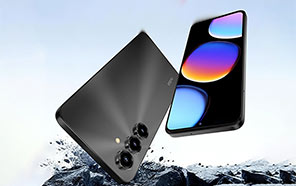
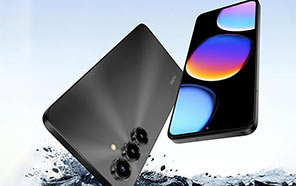
The phone’s design is vastly different from the older V70 Max. The ZTE Nubia V80 Max actually stole the look of a Samsung Galaxy S25 Plus. You’ll see three lenses floating on the backplate with no bump. The design is clean and minimal, but it’s definitely copying Samsung’s homework. Nubia V80 Max also upgraded the durability. TUV SUD tested this phone for an IP64 rating and 1.8m drop resistance. Its camera setup has two decorative pieces and one main shooter of 50MP resolution. There’s a 16MP selfie snapper on the front. It sits inside a notch on an IPS LCD. The screen itself is 6.9†in size. They advertise a 120Hz refresh rate for it, though it’s just an HD+ 720p panel like last time. Android 16 runs by default on the Nubia V80 Max. The OS has plenty of AI tools as part of its Nubia AI suite. But it’s all running on a weak Unisoc T7250 (12 nm) chip. The CPU performance will be on the lower end, but 8GB RAM will definitely help with multitasking. The phone’s storage is 256GB. Nubia V80 Max also has a fingerprint sensor, which is on the power button. The battery here is a 6000mAh pack with 22.5W wired charging support. It’s apparently tested for 4-year battery health. It’s not exactly as future-proof as the
Samsung Galaxy A07, because Nubia phones get one or two years of OS updates at best. But if updates don’t matter to you, the Nubia V80 Max is a good alternative, at least from the hardware perspective.