

AdvertisementReserved advertising space
Apple iPhone 16 Pro Hits Geekbench, Early Performance Disappoints
Remember, even though they have announced the iPhone 16 series, they don’t plan on releasing it to the public until September 20th and there are only a handful of people having access to those phones right now. Of course, we talk about content creators, but they can’t share anything with you due to embargos.

It’s an important reminder because no one can test and verify the performance numbers they showed at the event until after the sales have begun. But, the leaker James Atkinson saw a Geekbench test of the iPhone 16 Pro early and shared his opinion on X about the disappointing multicore results.
The last iPhone 15 Pro always got around 2900 and 7440 points in Geekbench 6 tests due to their Apple A17 Pro chip, but wait till you see the iPhone 16 Pro’s results. Designator iPhone 17,3 is the call sign for iPhone 16 Pro, and as you can tell from the Geekbench listing, single-core results are better than last time at 3114 points.
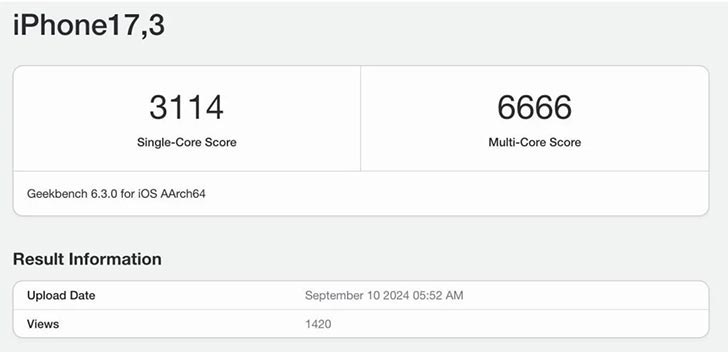
But that is not the case with multicore, because Apple's iPhone upcoming model fell way short from 7440 to 6666 points, even though we have the improved Apple A18 Pro here. If you want to contrast it with something, these scores are close to last year’s base A16 bionic chip recorded with 6,651.
There is also a chance that this Geekbench scorecard came from one of the testing units of the iPhone 16 Pro, and in that case, the real version could get vastly high numbers. But, like we said before, embargos and late sales are a hurdle right now for people who want the truth, and a peek behind the curtain.



Join the discussion
A place for your take on the story. Every comment is reviewed.
Add your voice.
Sign in to comment and reply.
Your Google name and photo appear with your comments.
Discussion guidelines
Keep it about the story. Links, spam, profanity, abusive language and sexual content are not allowed. All comments are reviewed before they appear publicly.
Loading discussion…
Comments
Newest firstLooking for an earlier discussion? Open the original article.