

AdvertisementReserved advertising space
Vivo Y38 5G Sneaks onto Geekbench & Bluetooth SIG Certification Flexing SD 4 Gen 2

Vivo is on the brink of unleashing a new addition to its Y-series lineup, and it’s shaping up to be quite the contender. Enter the Vivo Y38 5G, a smartphone poised to deliver competitive specs at a mid-range price point. Spotted on Bluetooth SIG and Geekbench, this device is making headlines online.

The Bluetooth SIG certification reveals some enticing details about the Y38 5G. Sporting the model number V2343, this smartphone is primed to support Bluetooth 5.1 connectivity and boasts impressive fast-charging capabilities. With support for 15W, 18W, and a whopping 44W fast-charging standards, topping up your battery will be a breeze.
Plus, enthusiasts have high hopes for a bundled 44W charging adapter straight out of the box. But what about performance? Geekbench has us covered. The Y38 5G flexes its muscles with an octa-core processor and an Adreno 613 GPU, hinting at a Qualcomm Snapdragon 4 Gen 2 SoC under the hood.
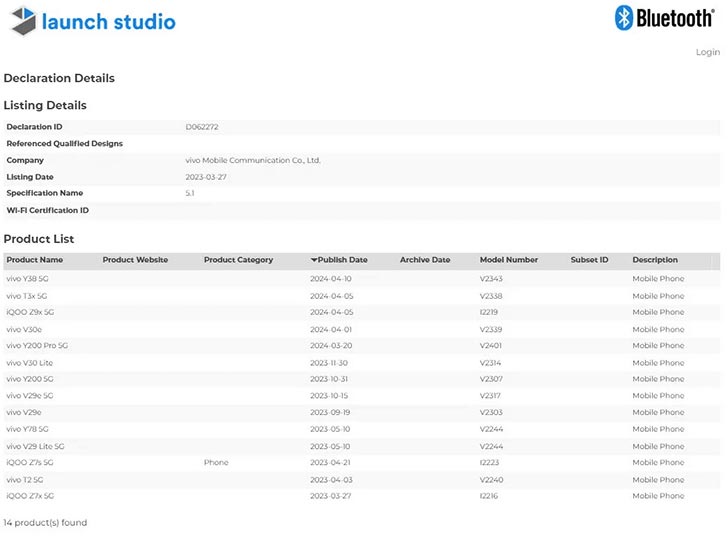
With a solid 8 GB memory option and Android 14 pre-installed, this budget new Vivo mobile is ready to tackle whatever the user throws its way. Expect FuntouchOS 14 for global markets and OriginOS 4 for the Chinese market. As we eagerly await further details, it's clear that Vivo has big plans for the Y38 5G.
With a global release on the horizon, this device is set to make waves in the mid-range smartphone arena. And let's not forget, Vivo isn't stopping there — rumor has it they're also gearing up to unveil the Vivo T3x, promising an exciting season for Vivo devotees everywhere. Stay tuned for more updates on these upcoming releases!



Join the discussion
A place for your take on the story. Every comment is reviewed.
Add your voice.
Sign in to comment and reply.
Your Google name and photo appear with your comments.
Discussion guidelines
Keep it about the story. Links, spam, profanity, abusive language and sexual content are not allowed. All comments are reviewed before they appear publicly.
Loading discussion…
Comments
Newest firstLooking for an earlier discussion? Open the original article.